
The Cry Wolf Project
What does a howl mean?
A long-term study of wild wolf voices, started with Yellowstone’s Wolf Project and built with partners around the world: over 600,000 hours of recordings, and growing by about 300,000 hours a year.
The project
Why do wolves howl?
Wolves run a family business across a big territory, and the howl carries for miles. Why do they do it? Do wolves have a form of language? And what does that say about ours?
The Cry Wolf Project was started by Dr. Jeffrey Reed and Dr. Dan Stahler of Yellowstone’s Wolf Project, the National Park Service’s long-term study of Yellowstone’s wolves, to build the largest database of wild wolf vocalizations in the world. It draws on the Wolf Project’s data and on recordings from scientists and citizen scientists around the world: over 600,000 hours of raw sound so far, with about 300,000 hours a year added.
From those recordings we annotate every type of wolf vocalization, and develop AI to speed up the work. Underneath all of it is one of nature’s oldest questions: what are wolves actually saying when they howl?
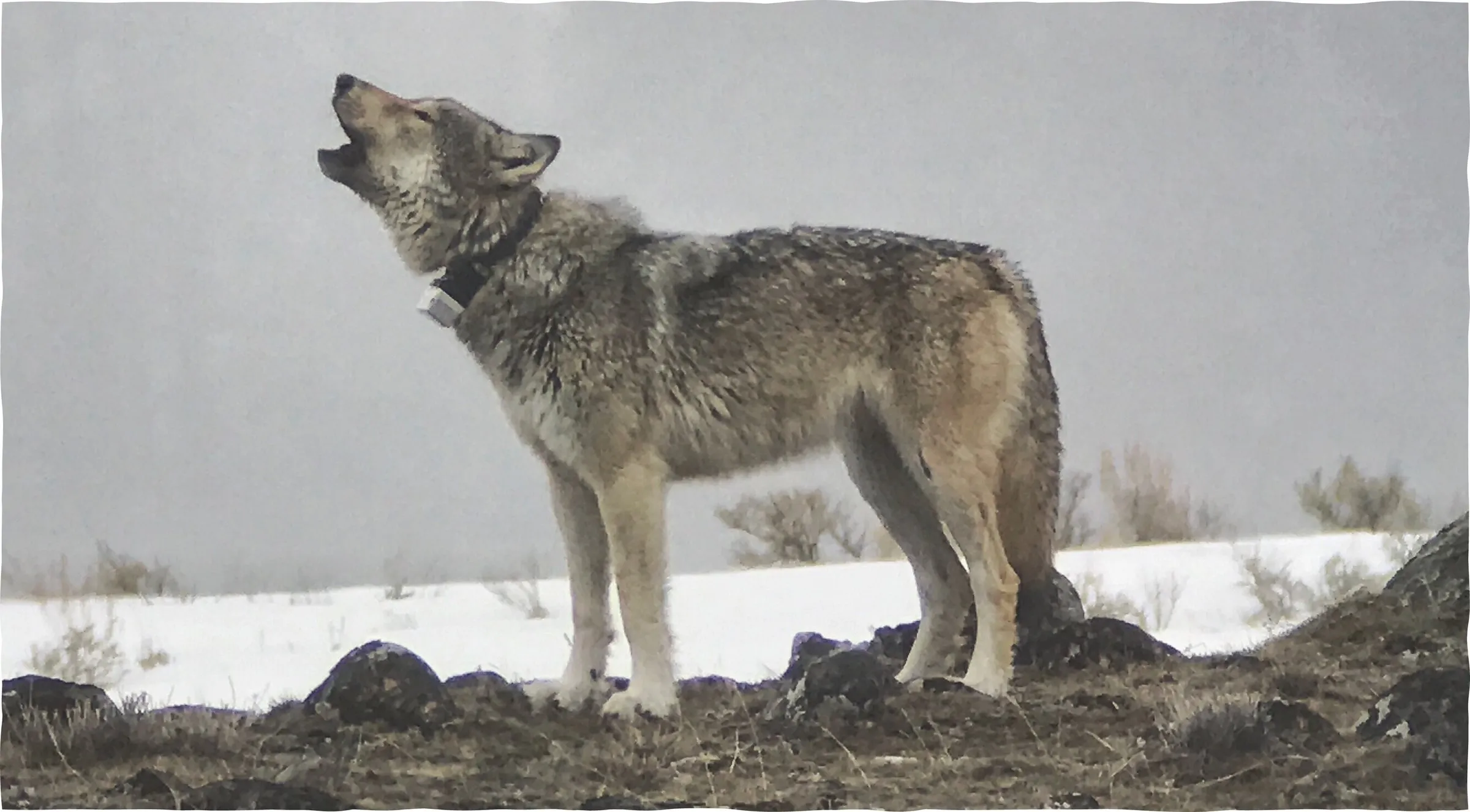
907F
One-eyed, legendary, and among the most prolific wolves in Yellowstone’s history.
One howl in the archive: 907F calling alone, deep in Yellowstone, at 5:49 PM on November 15, 2023.
Explore the gray wolf dictionaryExplore
Listen like a researcher.
- DictionaryGray wolfHowls, barks, growls, whimpers and more, each with a recording.
- DictionaryRed wolfA rare voice, and the story of a 1970s recording.
- Scroll storyWhat's left of the wildIf your body were every land mammal on Earth, one forearm would be wild.
- Try itHow good is your howl?Howl into your microphone and see how you compare. Warn the dog first.
- Try itWolf pianoWatch a howl rise out of the keys, then hear it played as notes.
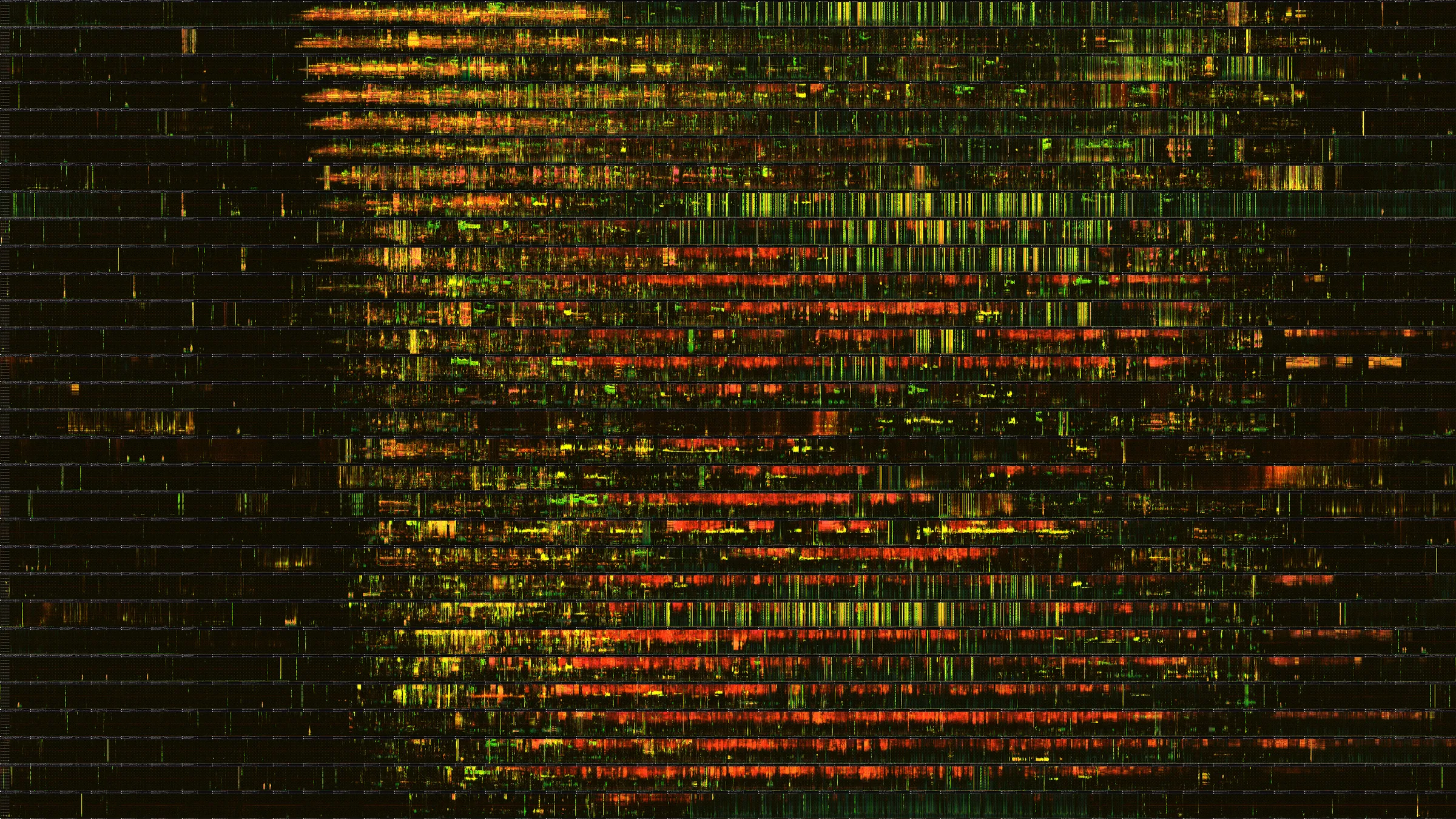
- ListenOne month of wild soundA month of a Yellowstone soundscape, in one picture.
Project goals
Six questions, one ecosystem.
- 01
Method
A reusable blueprint for listening to wildlife
A repeatable pipeline that carries field recordings all the way to AI analysis, built so other researchers can point it at songbirds, whales or elephants. Wolves are the proving ground.
- 02
Identity and kinship
Does every wolf have its own voice?
Yellowstone’s wolves have decades of documented family trees. Linking who a wolf is, and who it is related to, with how it sounds lets us ask whether a voice is inherited, learned or both.
- 03
Population and occupancy
Counting and mapping wolves by ear
Occupancy and population models turn thousands of hours of recordings into estimates of wolf numbers and territory, in some cases without seeing or handling an animal.
- 04
Social networks
The pack’s social web, rebuilt from sound
Who howls, who answers, and when. Tracking these exchanges across a network of recorders reconstructs the relationships within and between packs, and how they shift over time.
- 05
Behavior and meaning
What do howls actually mean?
The same call might signal a reunion, a warning, a territorial claim or the start of a hunt. Pairing recordings with direct observation, across thousands of events, makes meaning testable.
- 06
Information landscapes
The soundscape as shared territory
Extending Hutchinson’s niche theory with sound as a dimension: how predators like wolves and coyotes use, and eavesdrop on, one acoustic space and still coexist.
How we listen
Tools that listen everywhere, all the time.
Passive acoustic monitoring, surveying wildlife by continuously recording a landscape, is a cost-effective, noninvasive method that often outperforms camera traps in detection probability. Wolves make the case: they are loud, and can be heard from miles away, so a single recorder covers ground that would take many cameras.
The recordings are analyzed with GrizCam Desktop and its GrizEars module, software that handles the first-pass sorting and labeling with AI classifiers, including the Cry Wolf Classifier trained on this project’s annotations.
Built in Montana
The instruments behind the recordings.
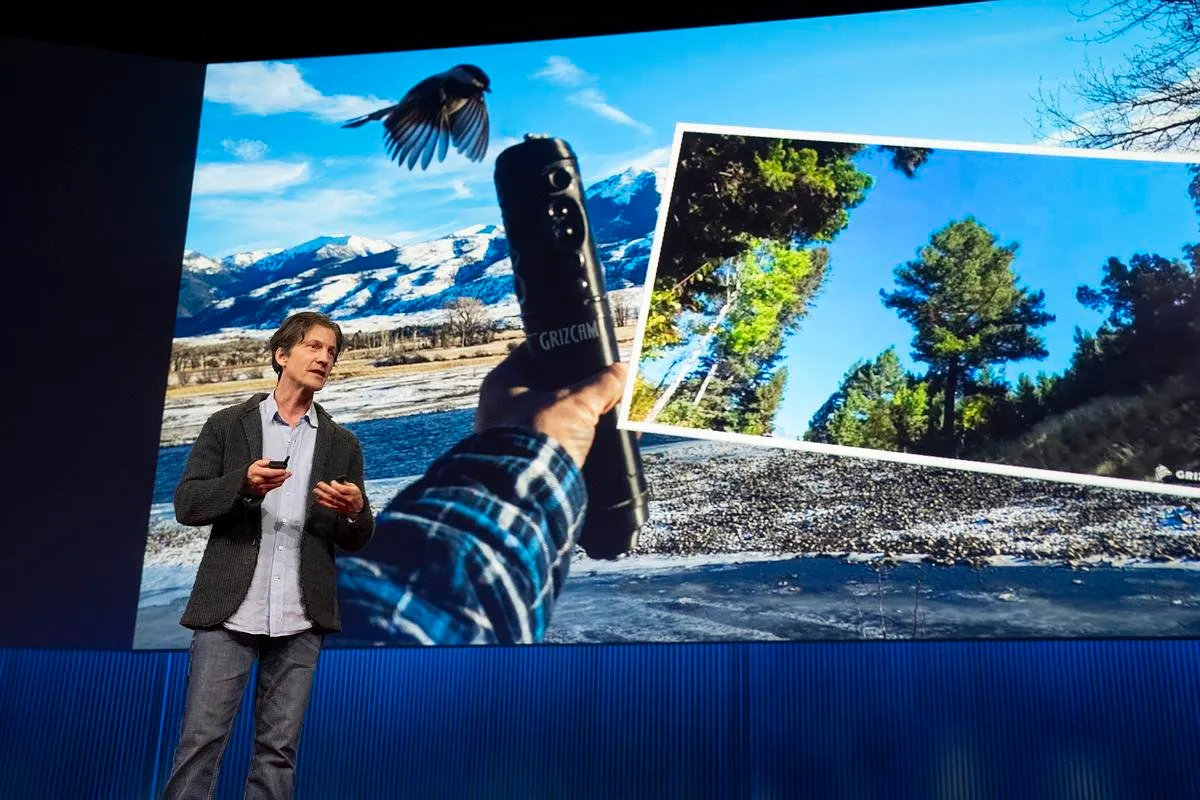
The project’s team developed GrizCam, a rugged multisensor recording unit that captures panoramic video, spatial audio and species detection in remote terrain. It is built by Grizzly Systems in Emigrant, Montana, at the north gate of Yellowstone.
In the news
In the news
- AtmosThe people learning to understand wolves
- Mongabay“Don’t shoot. Listen”: the AI-aided quest to understand Yellowstone’s wolves
- Mongabay KidsWhat are wolves saying? Decoding “wolfish”
- NVIDIAAI-powered devices track howls to save wolves
- The Washington PostYellowstone wolves, howls and bioacoustics
- SFGateEavesdropping on Yellowstone’s wolves
- YellowstonianThe secret chorus language of Yellowstone wolves