
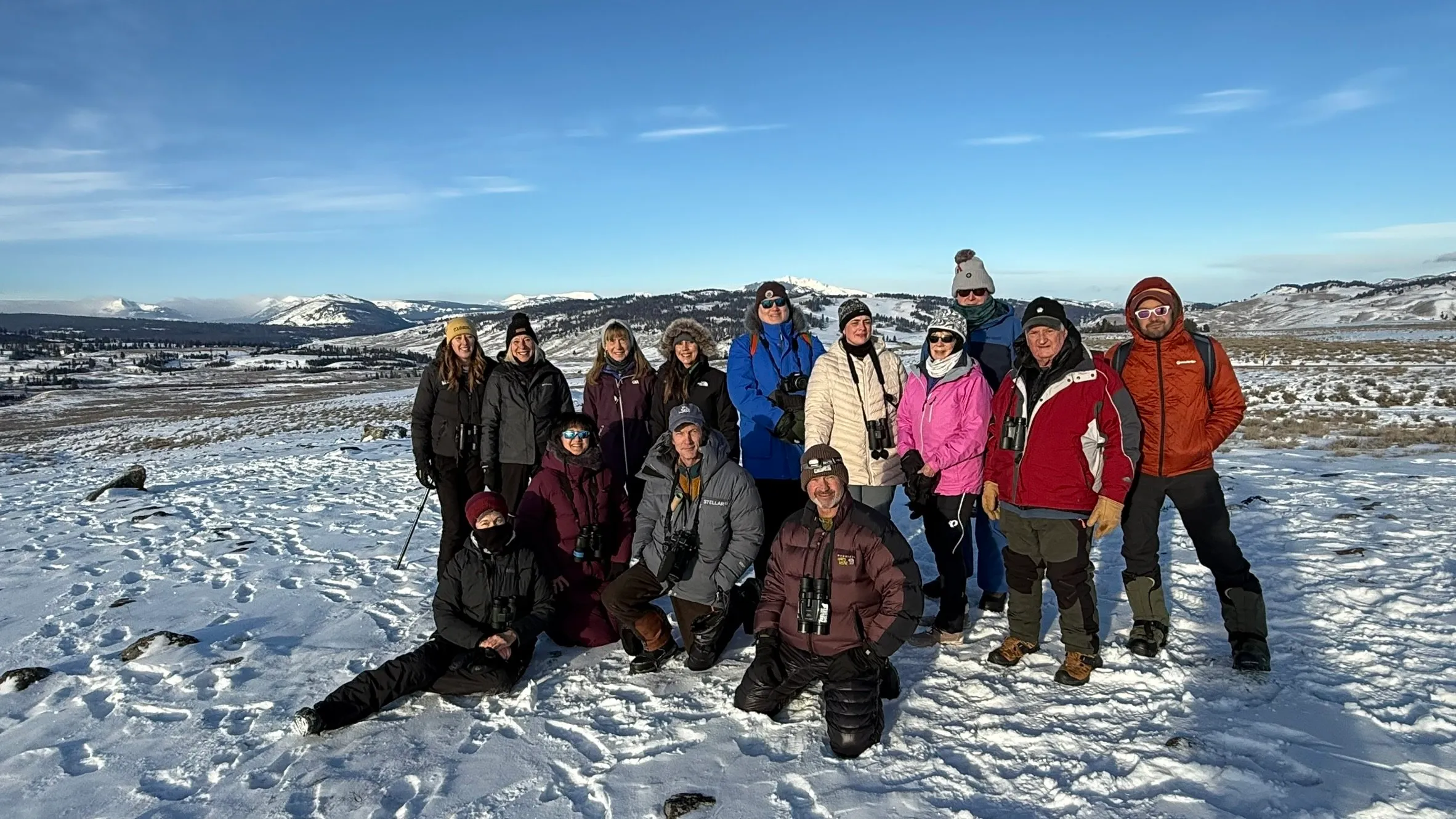
Each morning, participants will venture into the field to search for wolves and other wildlife, focusing on animal behavior, vocal communication, and bioacoustics research. As part of the Yellowstone Wolf Project’s ongoing bioacoustics studies, we will explore how wolves and other species use sound to navigate their world, coordinate as a pack, and interact with their environment. After a morning of fieldwork, participants will return to Lamar Buffalo Ranch for a late lunch, followed by a lecture with Dr. Jeff Reed on the science of bioacoustics and its role in wildlife conservation.
In the afternoons, students will have the option to:
- Join a guided natural history snowshoe trek, looking for wildlife sign while experiencing Yellowstone’s vast and dynamic soundscape.
- Take part in an early evening wildlife observation drive, conditions permitting, to listen for and observe animal vocalizations in different settings.
Evenings will feature films, bioacoustic case studies, and group discussions, giving a deeper understanding of how sound recording and analysis contribute to the study and protection of wildlife.
Topics include how to:
- Understand how animals use sound and other sensory channels to communicate.
- Identify different wolf vocalizations and their functions, from howls to growls and beyond.
- Use affordable recording equipment to capture and interpret the sounds of animals in your own environment.
See the course details on yellowstone.org.
Holy curiosity
Einstein once said we should never lose our “holy curiosity” about the world, and that’s exactly the spirit we’re bringing to this field course. We want your time in Yellowstone to be full of discovery and, most of all, joy. Everyone learns a little differently, so this class is designed to be flexible and fun. We’ll spend plenty of time outside, watching wildlife (yes, that means wolves) in their element. Our talks will dive into how wolves communicate, but we’ll also wander into the language of humans, birds, and a few other wild storytellers along the way. And for those who want to geek out a bit, we’ll have an optional breakout session on bioacoustics: how to record and decode the voices of animals wherever your adventures take you, including your own backyard. Reach out to Jeff at jeff@grizzlysystems.io if there are particular topics you really, really, really want him to cover.
We’re not here to earn PhDs, just to learn, explore, and have a good time. But if you’d like to do a little prep before the class, here are a few resources to dive into.
Recommended reading
- Rick McIntyre (2024). Thinking like a wolf: Lessons from the Yellowstone packs. Greystone Books.
- Karen Bakker (2022). The sounds of life: How digital technology is bringing us closer to the worlds of animals and plants. Princeton University Press.
Recommended video
- Jeff Reed, Can AI Help Us Speak with Wolves (2025 TED Talk)
- Jeff Reed and Dan Stahler, Using AI to Study Wolves in Yellowstone (2025 Montana PBS)
Bioacoustics
Feel free to bring a laptop, but it is not necessary. I will be using my computer to show you how to interpret spectrograms from actual recordings we’ll gather while we’re in the field. If you do bring a laptop, please have the audio analysis software below already installed.
- How to interpret spectrograms (video)
- Simple ways to record animals (video)
Audio recording devices
- Cell phone, optionally with software like “Song Meter Touch” for Android or iPhone
- Video camera such as the Nikon Coolpix, with a directional microphone from Sennheiser or Zoom
- Autonomous recording unit (ARU): Wildlife Acoustics (low-cost solution here; bring it to the class and I’ll help you set it up) or AudioMoth; or, if you’re really into birds, BirdWeather
Audio analysis software
GrizCam Desktop software (free) Download audio .WAV files from the Rescue Creek pack den site
Warmly,
Jeff & Amanda
Your instructors
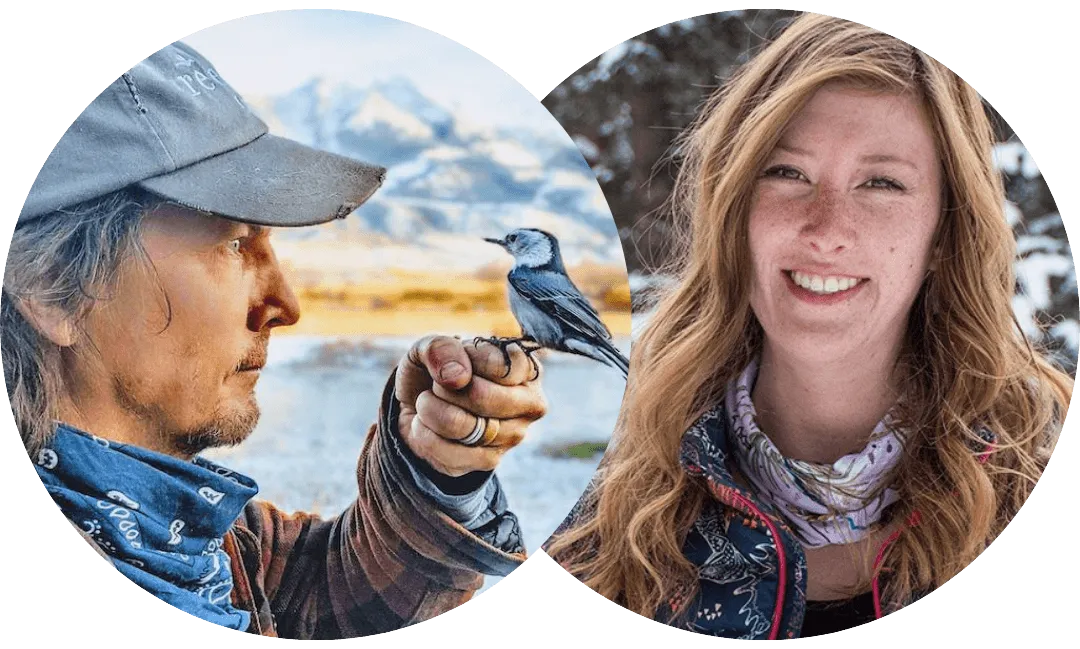
Jeffrey Reed co-founded The Cry Wolf Project. More about Jeff.
Amanda Evans is a Yellowstone Forever lead field educator with over 5 years of experience in Yellowstone. Her passion for wildlife and wild places has taken her to work in California, Texas, Wyoming, Alaska, and Montana. Amanda feels that it is through firsthand experience with the natural world that people build the strongest connections to it. Her goal is to use education to foster the same appreciation she feels and to inspire others to preserve and protect nature in all spaces.
The wolf that started it all
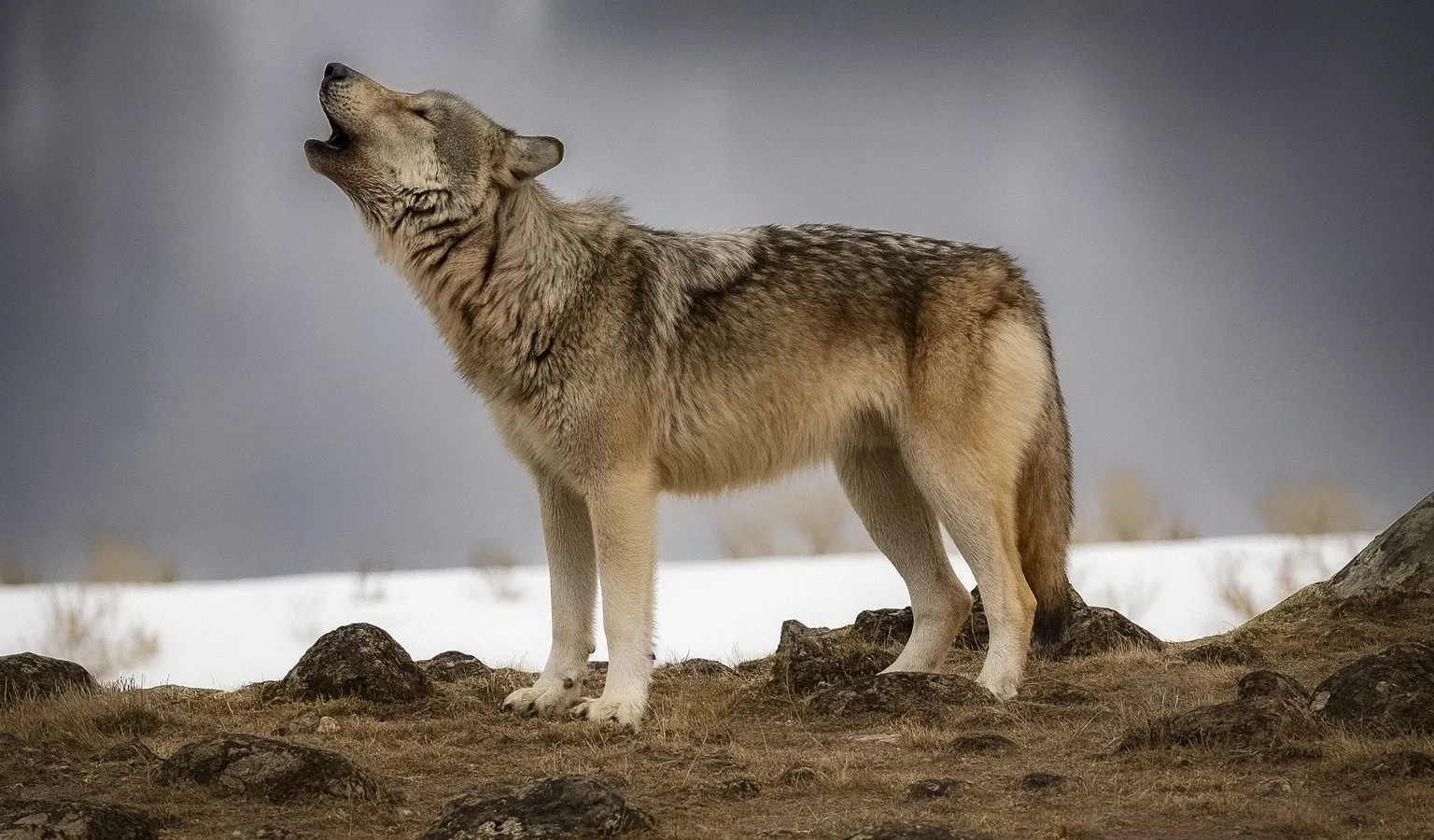
907F. Photo: Evan Stout.
This is the wolf that started it all for Yellowstone’s bioacoustics effort: 907F, one-eyed, legendary, and among the longest-lived and most prolific wolves in Yellowstone’s history. She made her howl alone, deep in the wilds of the Greater Yellowstone, recorded at 5:49 PM on November 15, 2023.