
A message from Murray McCarley
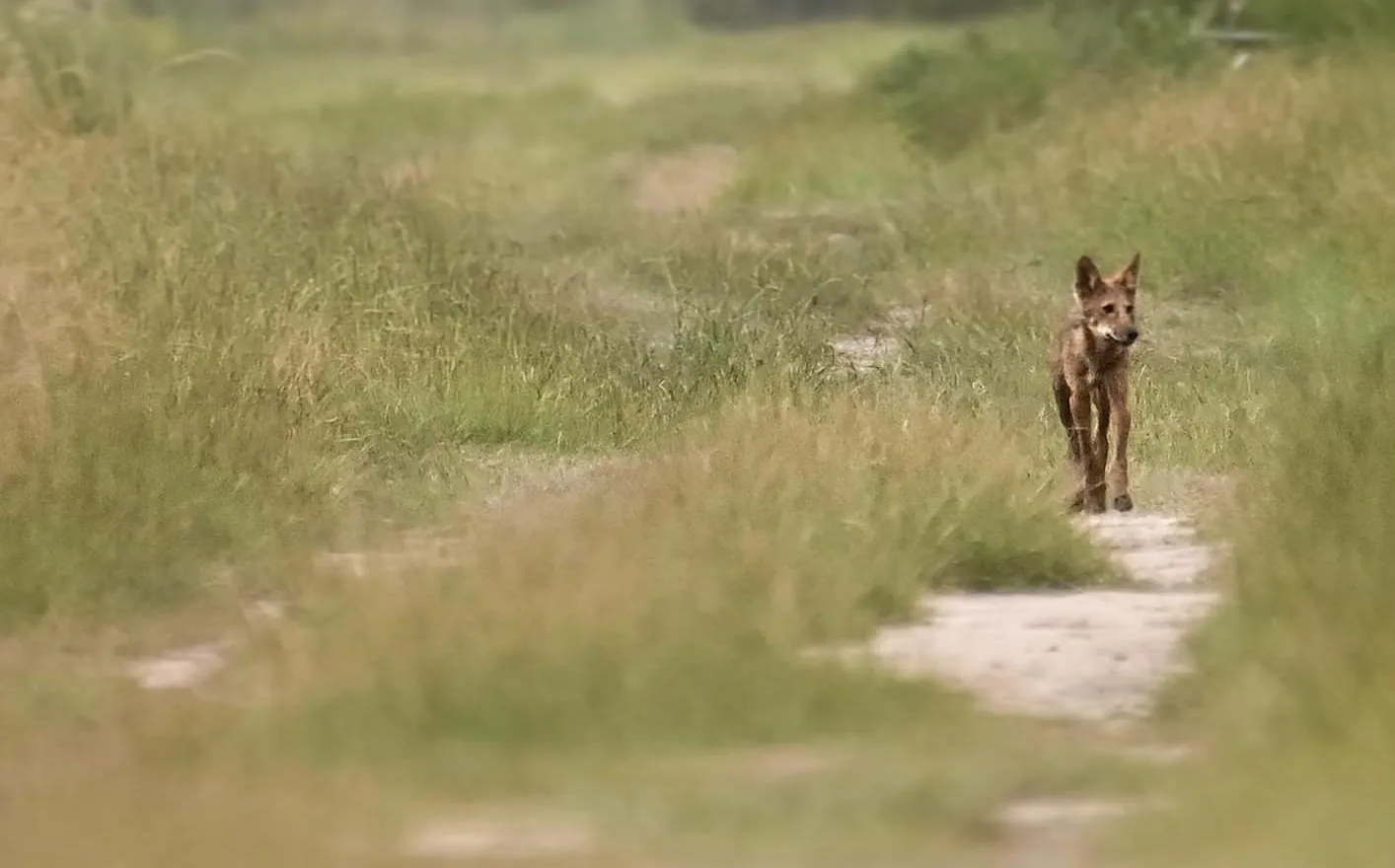
On a chilly autumn day just outside Yellowstone National Park, I checked my phone and saw an email from Murray McCarley, whom I did not know. He was writing to thank the Cry Wolf bioacoustics project for its study of gray wolf (Canis lupus) communication, recently featured in the Washington Post. What truly caught my attention was his mention of a long-lost recording from the early 1970s: his father’s reel-to-reel tape of a red wolf, captured with equipment vastly different from the technology I am fortunate to use today.
The red wolf
The red wolf (Canis rufus) is a critically endangered canid of the southeastern United States, recognized for its reddish fur and lean build, and between the gray wolf and the coyote in size. Red wolves once roamed forests, swamps and coastal prairies, but habitat loss, hunting and hybridization with coyotes drove their numbers down. By 1980 they were declared extinct in the wild, and in 1987 they were reintroduced at Alligator River National Wildlife Refuge in eastern North Carolina, still home to the only wild population. As of August 2026, the U.S. Fish and Wildlife Service estimated just 22 to 23 adults and subadults in the wild, plus 14 to 15 pups born that year. Mike Phillips, whom I had come to know through his role in Yellowstone National Park’s wolf reintroduction, was instrumental in the red wolf recovery program.
Red wolves live in family packs and primarily hunt deer, raccoons and small mammals, playing the role all predators do in the food web. Hybridization with coyotes and human-wildlife conflict make their conservation hard. Conservationists, and everyone who appreciates wildness, face a steep climb to protect this species through habitat preservation, genetic monitoring and public engagement.
Listening for wolves
In 1962, Howard McCarley, a professor at Austin College in Sherman, Texas, sounded the alarm about the red wolf’s unexpected spiral toward extinction. He pointed out that what people thought were wolves were actually coyotes or wolf-coyote hybrids. The wolf’s howl helped reveal how dire the situation was.
In the 1960s Howard searched for skulls to detect red wolf presence. By the early 1970s he was looking for them by their howls, and Murray, a teenager at the time, went along on many of the rides. They drove back roads at night playing taped wolf howls and an old motorized fire-department siren, mounted on plywood and run off a car battery (a sound wolves can’t resist answering), and listened for a response. Answering choruses came from both wolves and coyotes, and they focused on the howls that were distinctly wolfish. Howard trained many of his students in the technique, and they went on to use it in their own careers.
Howard’s tapes and notes
The red wolf no longer roamed its familiar territory. The biologists determined that the only red wolves left were hemmed in along a stretch of coast in southeastern Texas and southwestern Louisiana: coastal prairies and marshes a stone’s throw from Houston, Galveston and Beaumont, in one of the most industrialized areas of the country, among rice farms, cattle ranches and oilfields. It seemed an unlikely final redoubt for a forest-loving wolf.
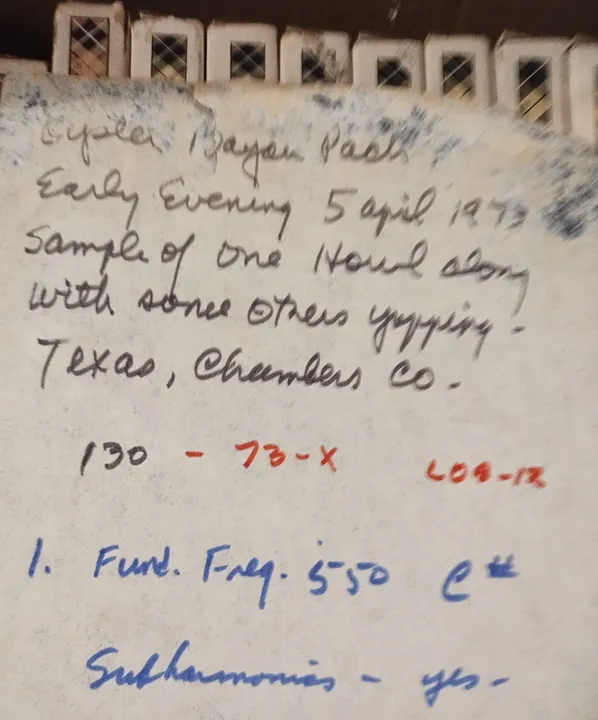
They ultimately found at least 100 wolves, mainly in Jefferson, Chambers and Liberty counties. One day they recorded red wolves in Chambers County with a UHER 4000 Report-L recorder and a microphone mounted in a hand-made parabolic dish. Murray sent me the reel-to-reel tape, but I still had to find and rebuild an old portable UHER 4000 Report-L, the kind news reporters once carried on a shoulder strap. With duct tape and a soldering iron, Howard’s recording finally played again, and it was converted to the digital version above.
Red wolf versus gray wolf howl
Gray wolves are the larger of the two. On average, gray wolves weigh 70 to 150 pounds (32–68 kg) and stand about 26 to 32 inches (66–81 cm) at the shoulder; red wolves typically weigh 45 to 80 pounds (20–36 kg) and stand around 24 to 26 inches (61–66 cm). That makes gray wolves roughly 30–50% larger in both weight and stature. Gray wolf skulls average 9.1 to 11 inches (23–28 cm), compared with around 8 to 9 inches (20–23 cm) for red wolves. These differences reflect each species’ adaptation to its habitat and prey: gray wolves to larger prey in open terrain, red wolves to smaller prey in dense forest.
The size difference is likely why a gray wolf’s howl is lower in pitch (on average 350 hertz in Yellowstone) than a red wolf’s (on average around 600 hertz, more like a coyote’s). You can see and hear the difference in the video at the top of this page, which also shows the rebuilt 1965 UHER 4000 Report-L and gray and red wolf skulls. A spectrogram is simply a way of visualizing the pitch, duration and loudness of a sound; lower pitches sit lower on the vertical axis.
Technology then
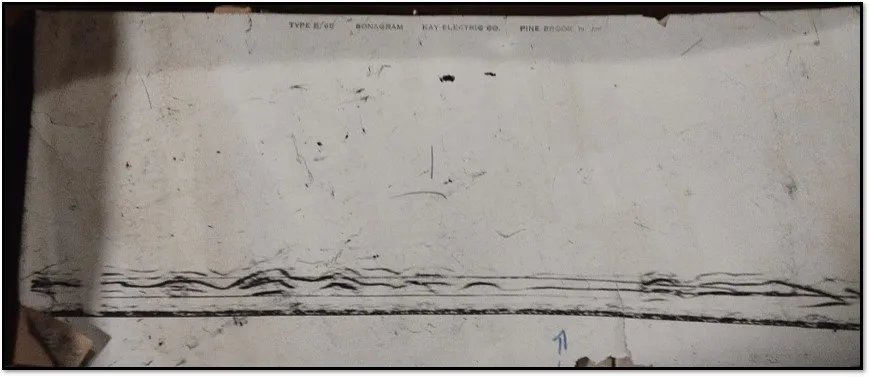
In Howard’s day, recording animals (or people) meant lugging around a reel-to-reel recorder roughly six times the size of today’s devices, heavy and about as user-friendly as a lawnmower. To capture a wolf howl you needed a parabolic microphone, unwieldy reels of magnetic tape and plenty of batteries. To analyze the recordings you hauled out yet another machine to print spectrograms, or sonagrams, on paper. This was industrial-strength audio gear, not something you’d open over breakfast.
Kay Electric, founded in 1947 by Elmo “Bud” Crump, developed the first commercial sound spectrograph, the Sona-Graph. It became a critical tool for analyzing speech, animal vocalizations and signals intelligence; the technology is now owned by PENTAX Medical.
Technology now
Today we use digital acoustic recording units (ARUs). They can record continuously or at set times of day, run from two weeks to indefinitely (on solar panels), and store audio on a drive the size of a thumbnail. All that data fits on multi-terabyte drives that sit in the palm of a hand; it would take an Olympic-size swimming pool to hold the tapes Howard would have needed for the same amount. More importantly, computers let us view an hour of audio at a time and step through hundreds of hours in minutes, and artificial intelligence helps us find what we are looking for, such as wolf howls or the song of a black-capped chickadee.
Times have changed, but the gratitude we owe people like Howard McCarley should go without saying. Thank you, Murray, for helping me tell a small part of your dad’s story, and yours. I agree, Howard: “there will probably never be a last lecture on wolves because new information keeps coming in and changing our interpretations.”
A recent success
Despite the challenges red wolves face, a recent success offers hope. According to a press release from Wolf Haven International, in October 2023 the critically endangered American red wolf M2191 (house-named Finch, born at Wolf Haven in 2016) was moved from Wolf Haven to Alligator River National Wildlife Refuge and placed in an acclimation pen in the territory of the Milltail pack. After three months of positive interactions through the pen fence, he was released on January 26, 2024. He was soon seen on remote camera traveling with the pack’s breeding female, F2225, integrated well with her four two-year-olds and four yearlings, and in mid-April the U.S. Fish and Wildlife Service confirmed that the pair had produced a litter of eight pups.
Wolf Haven, a wolf sanctuary and education center in Tenino, Washington, has taken part in the American Red Wolf SAFE program since 2003 and the Mexican Wolf SAFE program since 1994. M2191 is the second red wolf from Wolf Haven released into the wild in North Carolina, after F2216 (Iris) in 2021, and five litters of red wolves have been born there in the past 20 years. “It is an incredible honor to be part of the SAFE program and the American Red wolf recovery effort,” said Lead Animal Care Specialist Judah Jamison. Learn more at wolfhaven.org/conservation/SAFE, and follow the wild population through the U.S. Fish and Wildlife Service red wolf recovery program.
Credits
Recording by Howard McCarley and his field team, with thanks to Murray McCarley for preserving and sharing the tape. Hero photo by Aspen Stevanovski; tape-label and sonagram photos by Jeffrey Reed. Release news from Wolf Haven International and the U.S. Fish and Wildlife Service.