
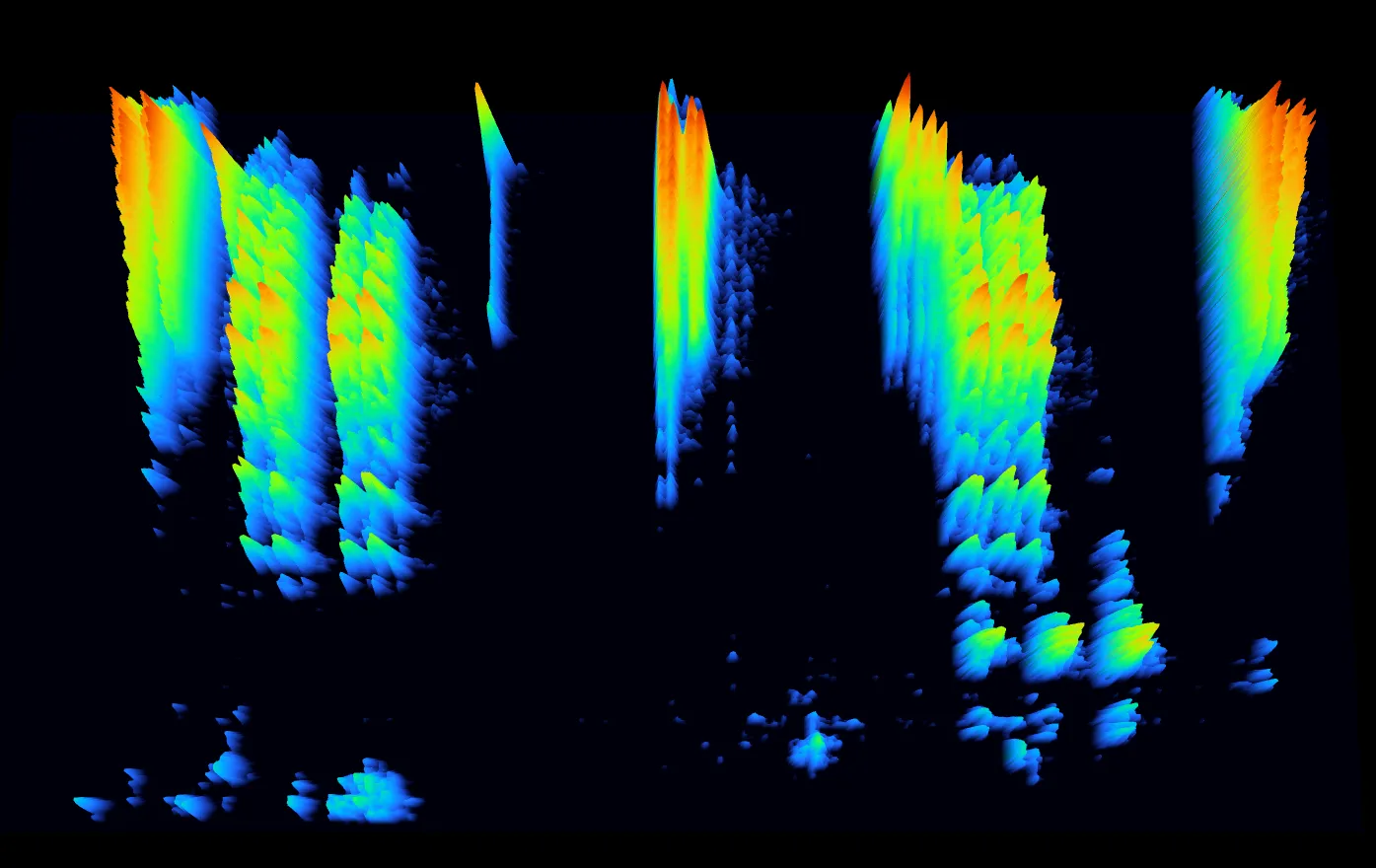
A picture of sound
Sounds have basic components: frequency or pitch (high versus low notes), duration, and amplitude or volume. A spectrogram draws all three at once.
- Time runs from left to right.
- Frequency, or pitch, runs from bottom to top. Low sounds sit near the bottom; high sounds sit near the top.
- Loudness is shown by brightness or color. The brighter the mark, the louder that sound at that moment.
What to look for
- A howl is a long, smooth line. Wolf howls span about 150 to 1,000 hertz and last 1 to 10 seconds. Fainter copies of the line, stacked above it, are its harmonics.
- A bark is short and noisy: a brief burst that spreads up and down the frequency axis.
- Birdsong sits higher, often in quick, repeated notes, like the chickadee calls at the top of this page.
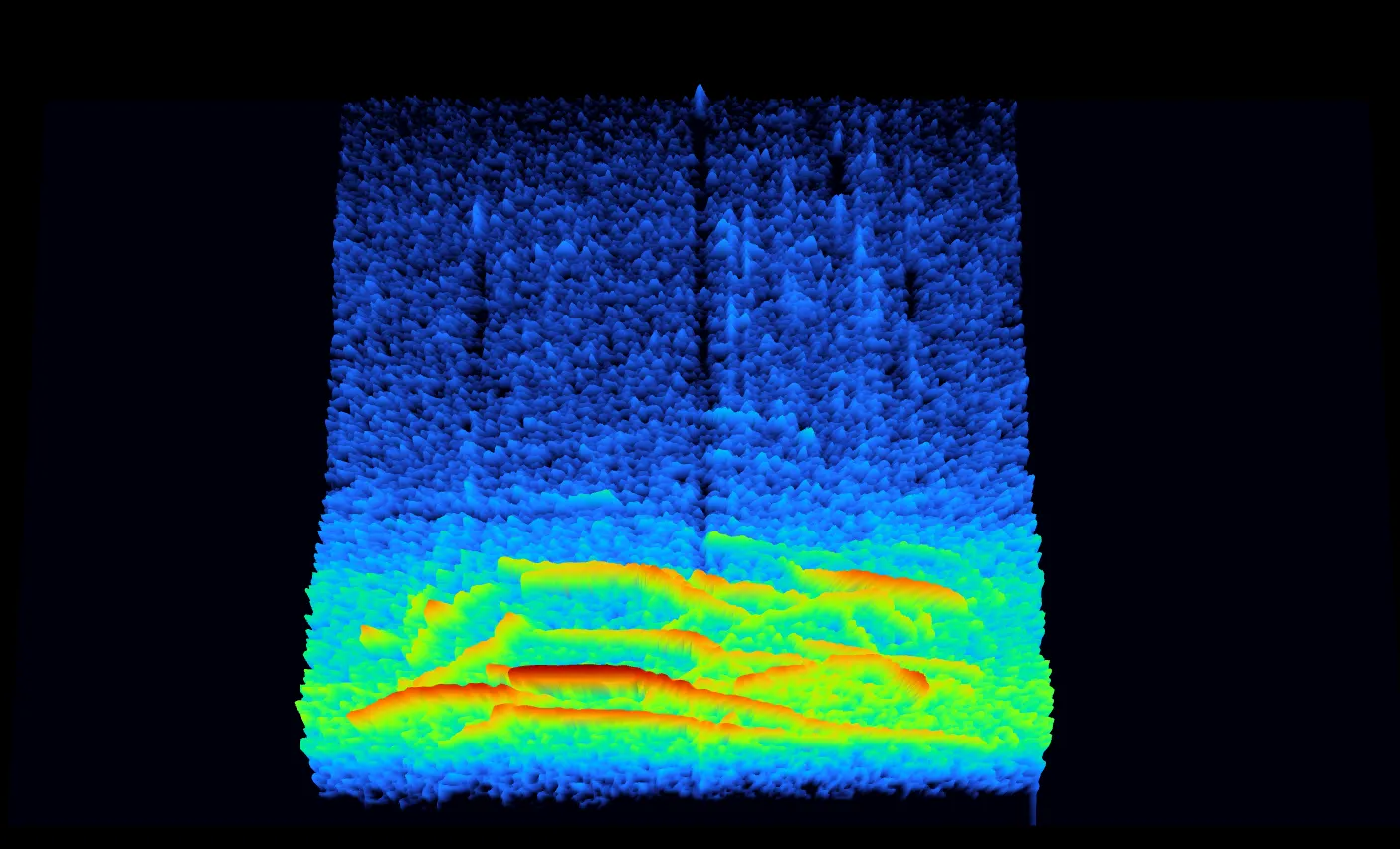
A month on one page
Spectrograms can stretch from a single call to a whole month. In the one month of wild sound image, each row marks a day, from midnight to midnight, and you can watch the morning birdsong shift later as the days grow shorter.
Try it yourself
On How good is your howl? your microphone draws a live spectrogram of your own voice, so you can compare your imitation with a real wolf.