
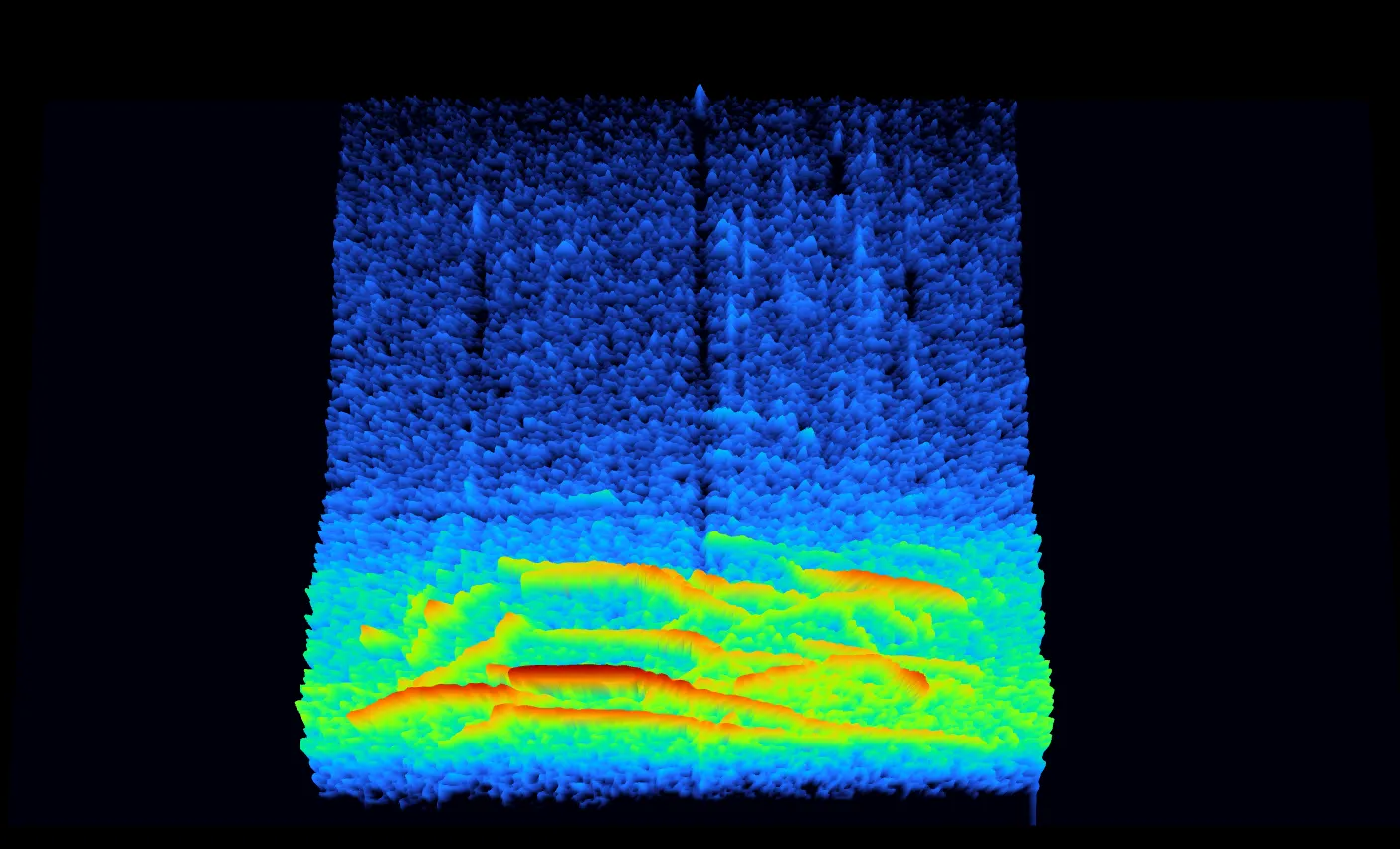
When learning any language, one of the first skills is learning the sounds that make it up. Sounds have basic components: frequency or pitch (high versus low notes), duration, and amplitude or volume. Combined in certain ways, they build ever-larger units, such as phonemes and syllables, which in turn form morphemes, words, sentences and discourses that carry meaning and information to others.
By watching how your voice looks when you imitate another species, you can gain insight into how that animal communicates.
How to play
- Press the button to turn on your microphone. Your browser will ask for permission.
- Pick a howl and play its recording. Watch the shape it draws.
- Now imitate it. Your voice draws its own spectrogram, live, next to the real one.
- Compare the two. Is your pitch too high or too low? Is your sound too short? Does it rise and fall in the same places?
Your audio stays on your device
The spectrogram is drawn in your browser. Your audio stays on your device; nothing is uploaded.
Tips
- Start with a howl. Wolf howls span pitches from about 150 to 1,000 hertz, last 1 to 10 seconds, and often begin around 350 hertz, middle F on a piano. Hum that note first, then let it rise.
- Hold it. A howl is a long, steady tone. Short bursts look more like barks.
- Look for the stripes. A rich, tonal howl shows harmonics stacked above the main pitch. A breathy one smears into noise.
- Find a quiet room. Fans, traffic and other voices draw on the spectrogram too.
- Mind the distance. Stay about an arm’s length from the microphone so loud notes don’t distort.
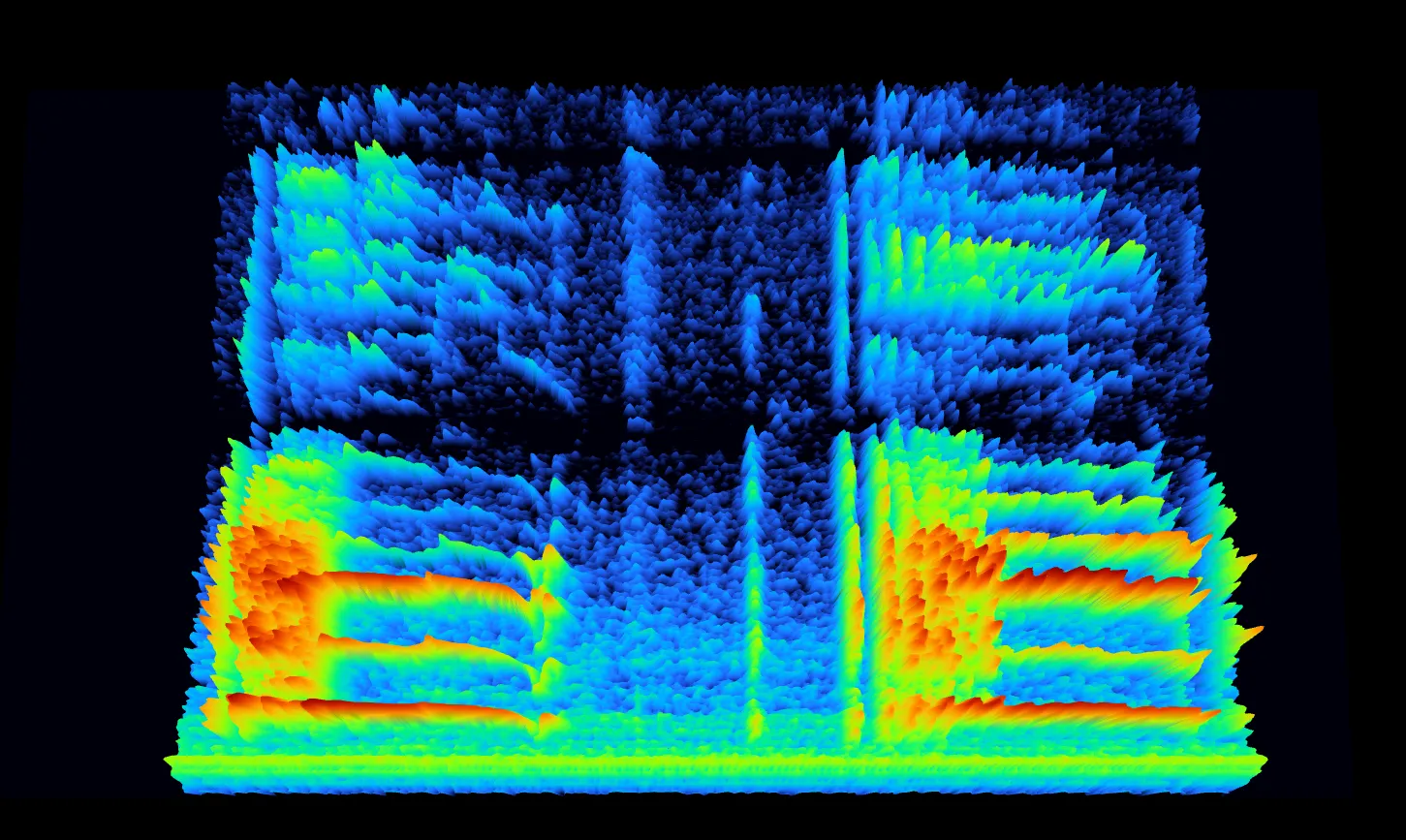
Want to hear what the real thing sounds like first? Listen to the wolf howls, barks and whimpers in the gray wolf dictionary.