
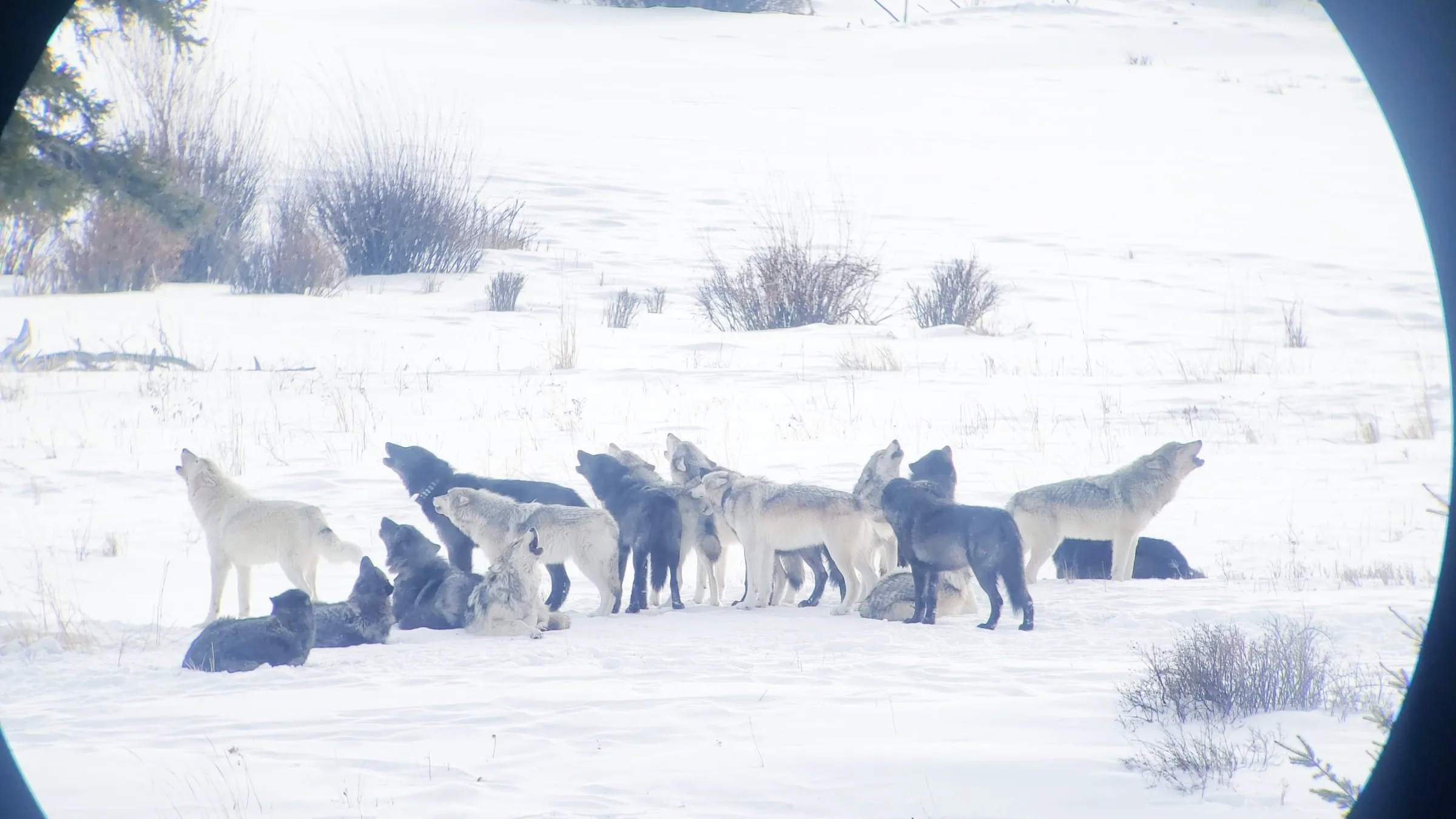
Wolves have a rich vocal repertoire: yelps, whines, moans, growls, woofs, barks and their iconic howls. These sounds serve many purposes, from defending territory to locating pack members to sending alarms. But little is still known about all of the sounds they make or the meaning of them from a wolf’s perspective. Their howls vary a great deal, and wolves sometimes combine two different sounds, such as howls and barks, into calls with nuanced, context-dependent functions. Because wolves live in social packs, they often weave several of these sounds into a chorus howl (or “rally”), with multiple wolves vocalizing at once in a crescendo-like group call.
We already understand a lot about wolf vocalizations. The Cry Wolf Project is using AI and science to dig deeper into what they mean.
How to listen
Just as when learning a new human language, start with the basic sounds. Play each entry above, then listen for the same sounds in the field, in videos online, or on our YouTube channel. A spectrogram shows the pitch and duration of a sound as a picture, and the video dictionary of wolf sounds beside the introduction pairs each call with its spectrogram so you can learn to see and hear the differences.
Credits
Recordings by The Cry Wolf Project. Descriptions draw on the published literature on wolf vocal behavior, including Mech (1970) and Vicente Palacios’s work on Iberian wolves. With deep gratitude to the scientists of Yellowstone National Park’s Wolf Project, and to the researchers, collaborators and citizen scientists around the world (meet the team) who help us listen.